2025. Teleprompter, 4 channel sound, digital print, projection, LED panels
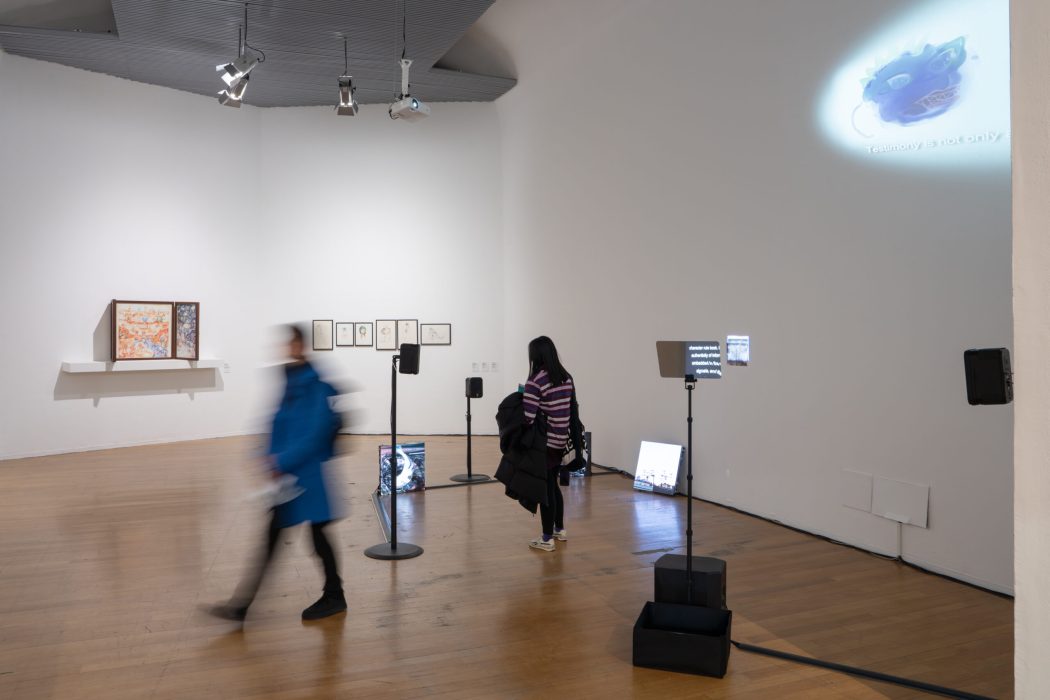
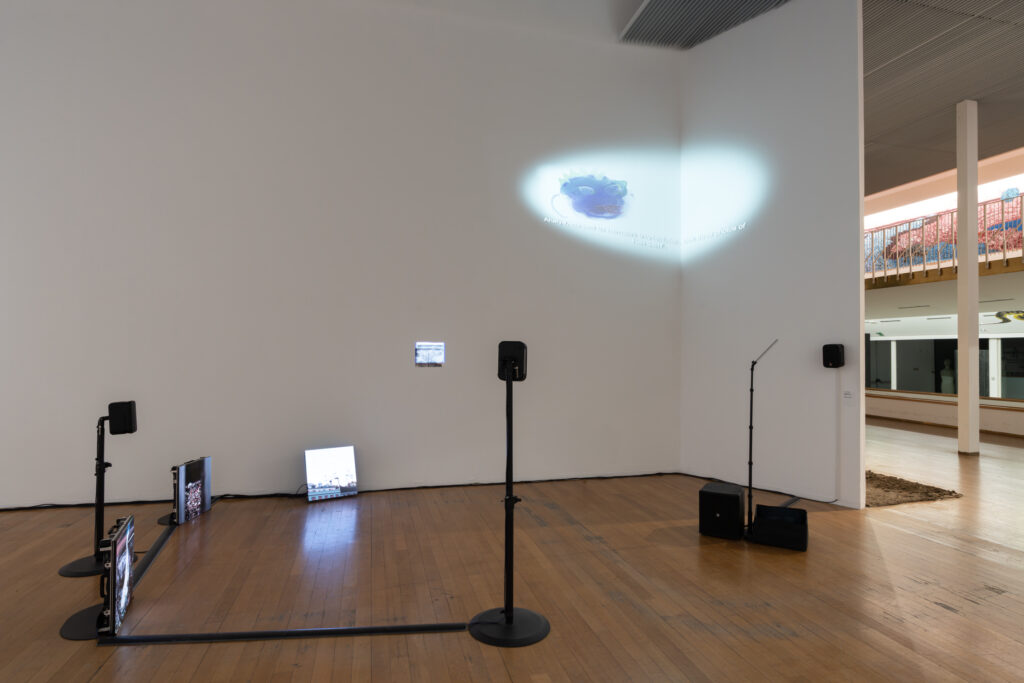
Unraveling Control Loops is an installation which looks at transmissions in and of the world that alter history and perception across systemic, bodily, and planetary scales. Three scenes chew upon events from different moments in time, bringing them into proximity to draw relations between the past and present, in anticipation of a future. Electronic communication networks, deleted photographs, and seismic reverberations are read as sites to speculate on the effects of power as it moves across time and media.
The sound in the install assumes the role of three voices – a signal operator, a woman who was turned into stone, and a catfish. The voice as it is uttered when a signal operator relays messages in a language which is dense with meaning; the voice as it is heard through an improvisation with understandings of law; the voice as it is felt through amplified vibrations of the earth.
Installation view exhibition 'India. Of Glimmers and Getaways', PAC, Milan. Photograph by Lorenzo Palmieri. Courtesy of PAC
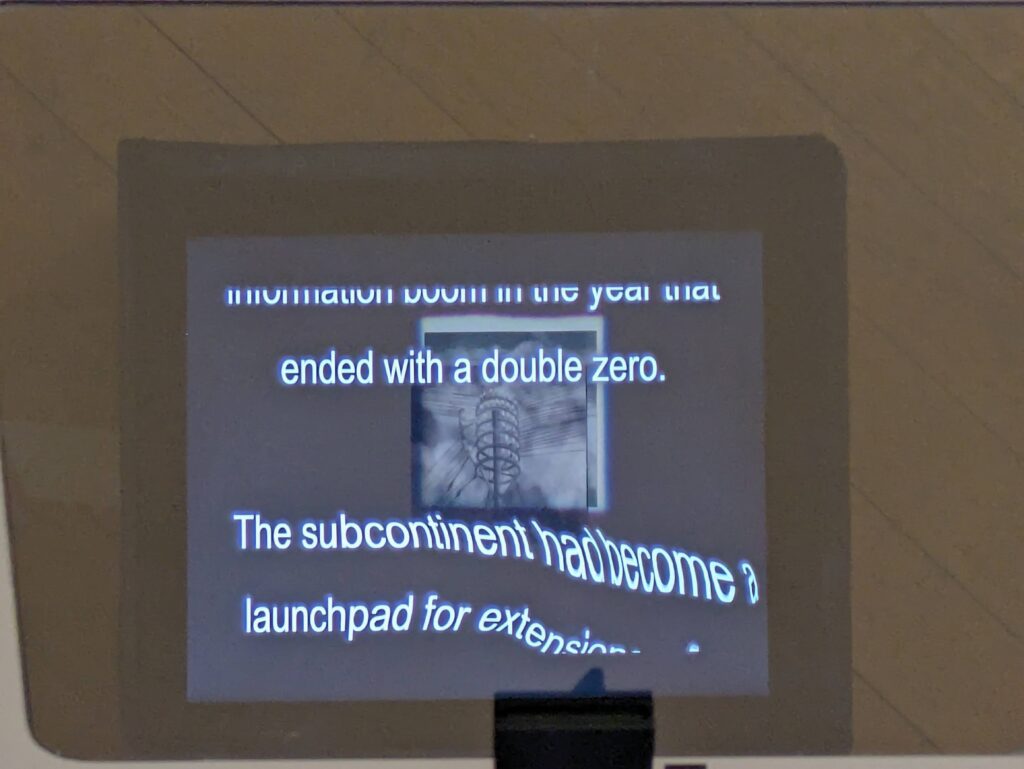
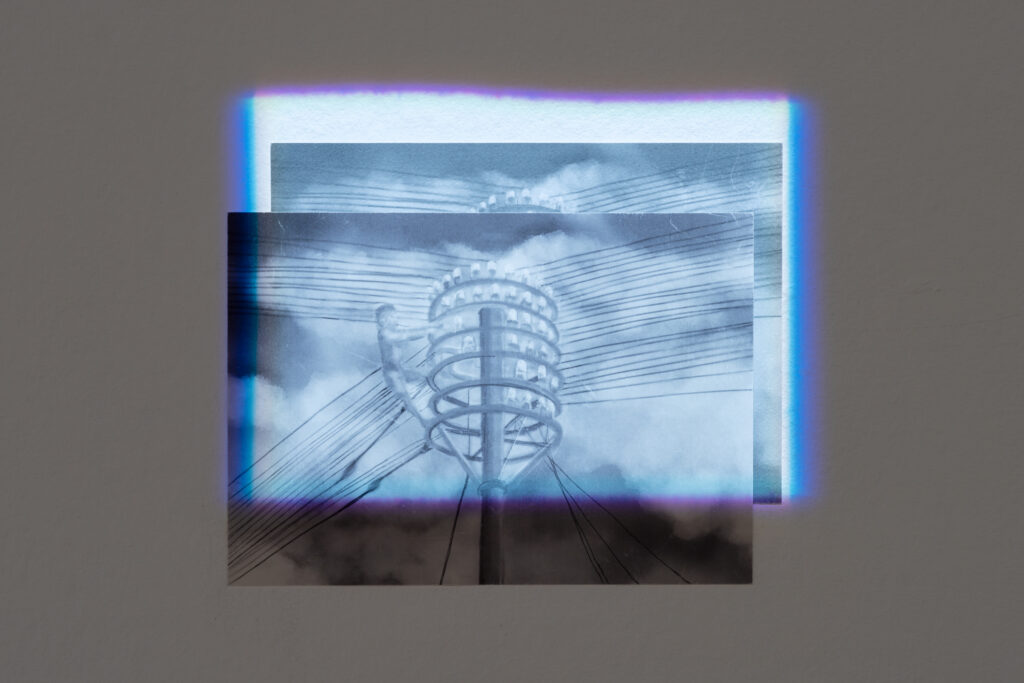
A postage stamp released in 1953 by the Indian Postal Service depicts a technician standing atop a telegraph pole, marking a centenary of global flows of information. The first electronic communication network changed the way the world was viewed in the 19th century. The shortening of time and distance enabled rapid transmission of media, producing what D. K. L. Choudhury calls a world of shadowy meanings. Logistical abstractions compressed communication into a semantic excess of private, secret, business, and administrative exchanges. Within this chaos of signs, both fetishised technology and the imagination of a purist state enabled by it entered into crisis. The image gestures towards a confrontation over language and the nature of knowledge.
As electronic communication became a primary tool of governance, its proximity to power eclipsed diverse experiences that could otherwise inform inquiry, invention, and address technical change.
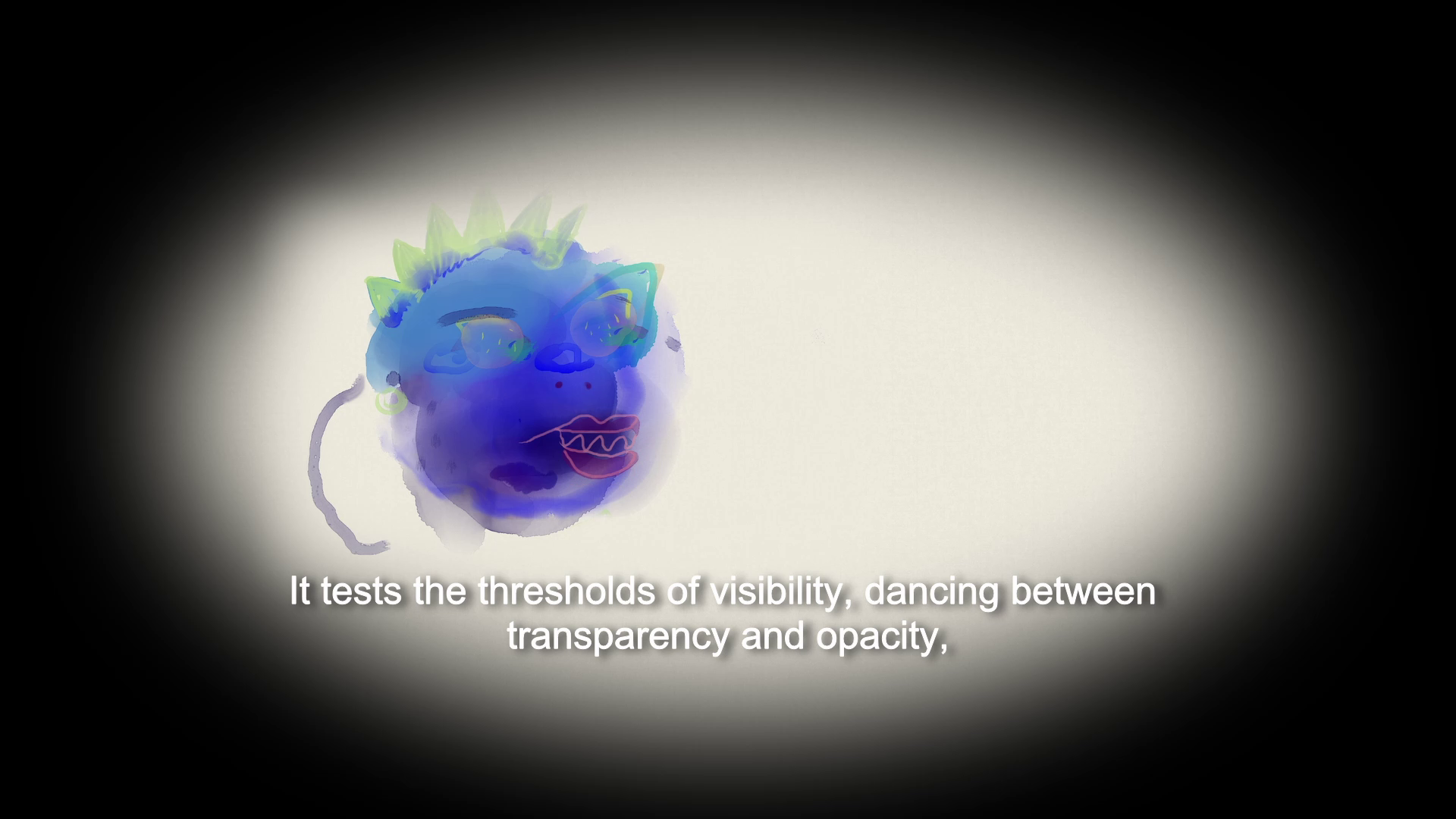
Close-up of teleprompter. Installation view exhibition 'India. Of Glimmers and Getaways', PAC, Milan.
Digital print. Installation view exhibition 'India. Of Glimmers and Getaways', PAC, Milan. Photograph by Lorenzo Palmieri. Courtesy of PAC
Ahalya is a mythical figure exiled and turned to stone for an act that resists explanation. In Sanskrit, Ahalya means unploughed — a symbol of untouched land which is turned on its head by an act of defiance that cuts deep through geological time. The premise of generating a written account in place of absent evidence begets an oral exercise of a call and response. When memory doesn’t have its place and time on the support of inscription, it navigates memory and judgment through conversations around interpretation and subversion of law. At times it is spoken, sometimes sung, chanted and sometimes silent.
Installation view exhibition 'India. Of Glimmers and Getaways', PAC, Milan. Photograph by Lorenzo Palmieri. Courtesy of PAC
Video still
Cybernetics maps action in a world lodged in recursive movements of reason. While recursivity shows how technique stabilises itself, contingency opens onto multiple cosmological possibilities to grasp the world. If algorithmic networks operate through abstractions that protect state security and profit maximization, their crisis lies in the suppression of contingency and instability. Besides this closure, forms of thinking appear where figures of movement and mutability deviate from recursive alignment to totalizing power. They are built through migrations between worlds, both real and imagined.
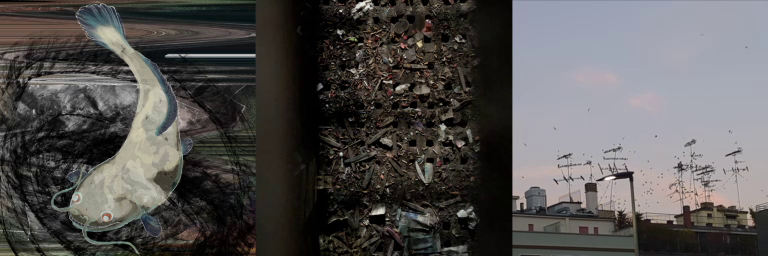
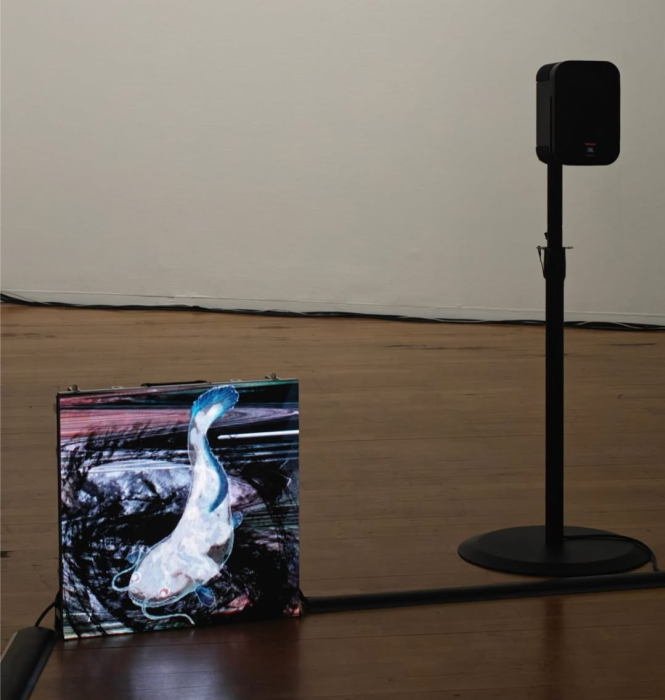
Catfish have whiskers that can sense the mildest of tremors. It is a symbol of unruly intelligence in Japan. A cartoon of it is often found on flex hoardings carrying an earthquake warning sign. They exist as material across lines of transmission and in the mind through lines of flight. How does the mind reactivate this unruly presence across calculated abstractions?
Video still
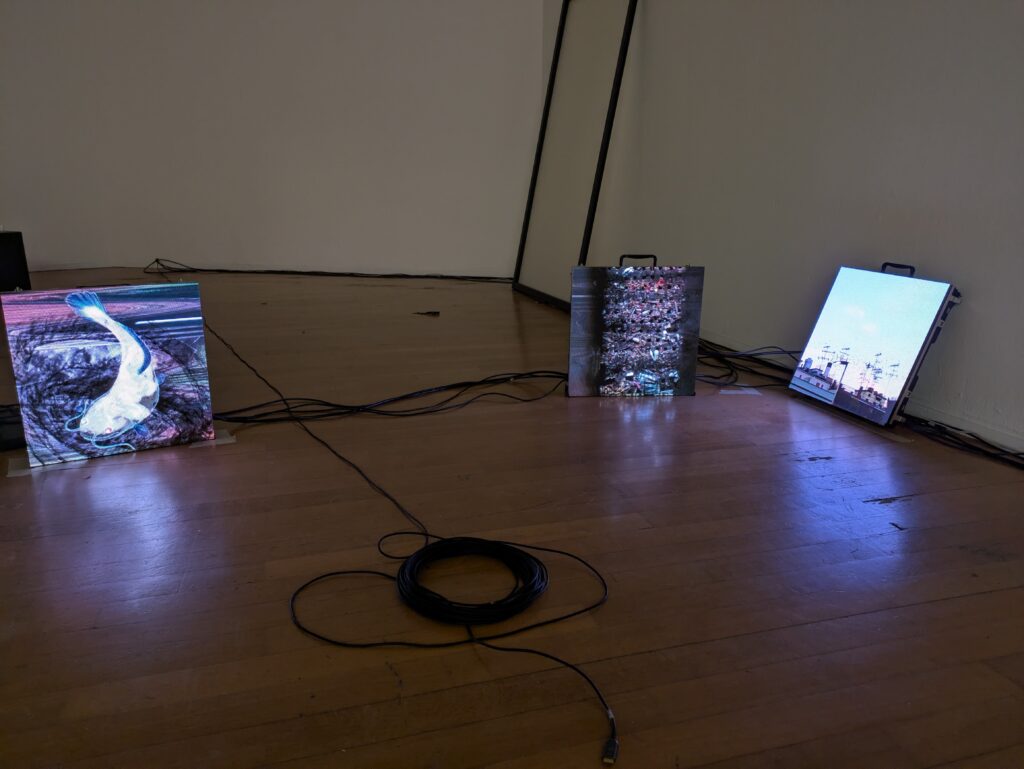
Video on LED panels. Installation view exhibition 'India. Of Glimmers and Getaways', PAC, Milan.
Installation view exhibition 'India. Of Glimmers and Getaways', PAC, Milan.
Unravelling Control Loops was shown at ‘India. Of Glimmers and Getaways’, an exhibition curated by Ferran Barenblit and Raqs Media Collective, at PAC – Padiglione d’Arte Contemporanea, Milan.